Hungry Ecocities
Hungry EcoCities is a research and development initiative supported by the European Commission that tries to use the combined power of art, science, and entrepreneurs to develop digital prototype that help in creating a more healthy, sustainable, and affordable agri-food system for all.
2022- 2026
-
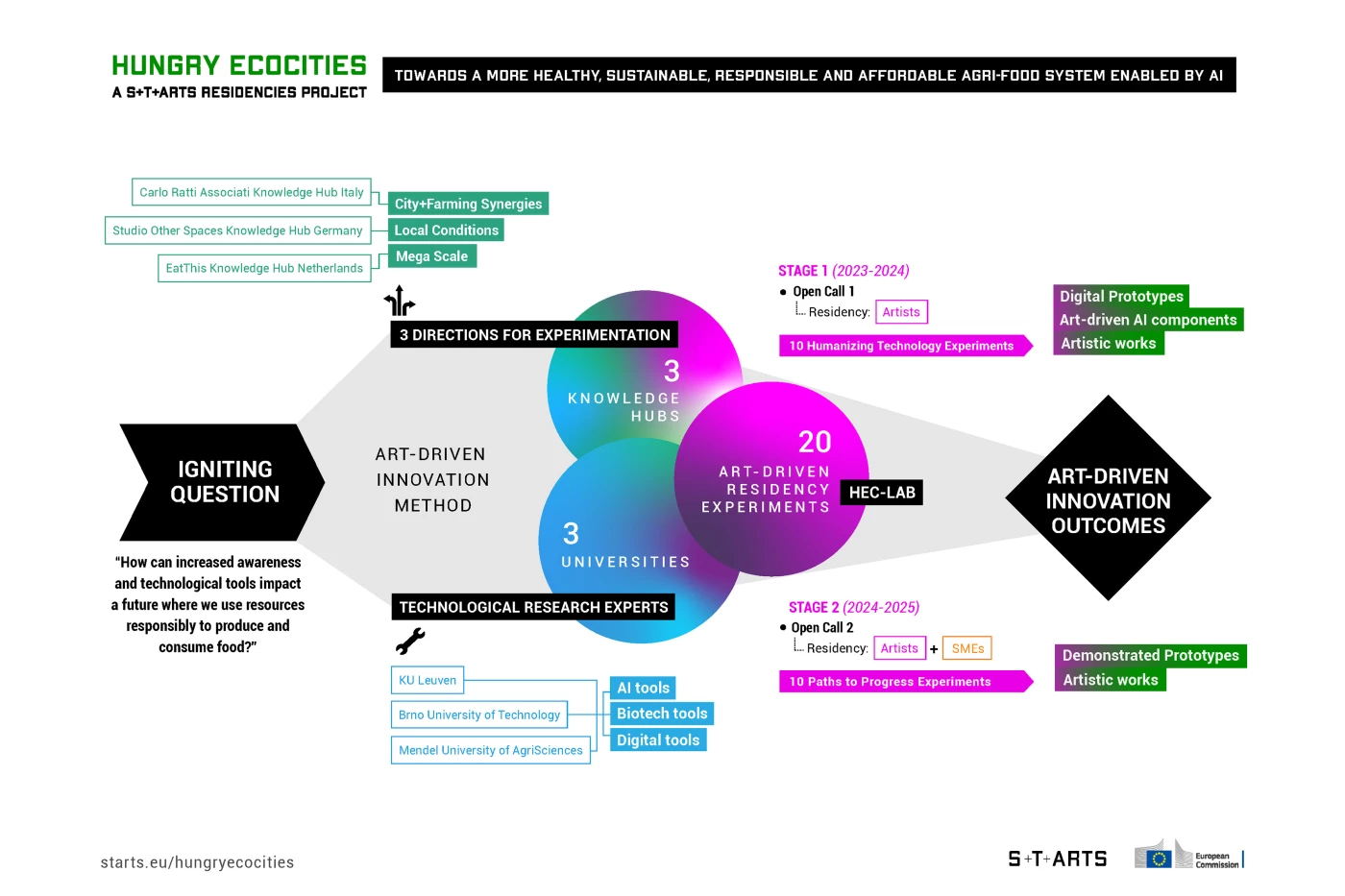
Hungry Ecocities is a consortium that brings together science, art and enterpeneurs to explore the role of AI in the food production domain. Hungry Ecocities
/4 -
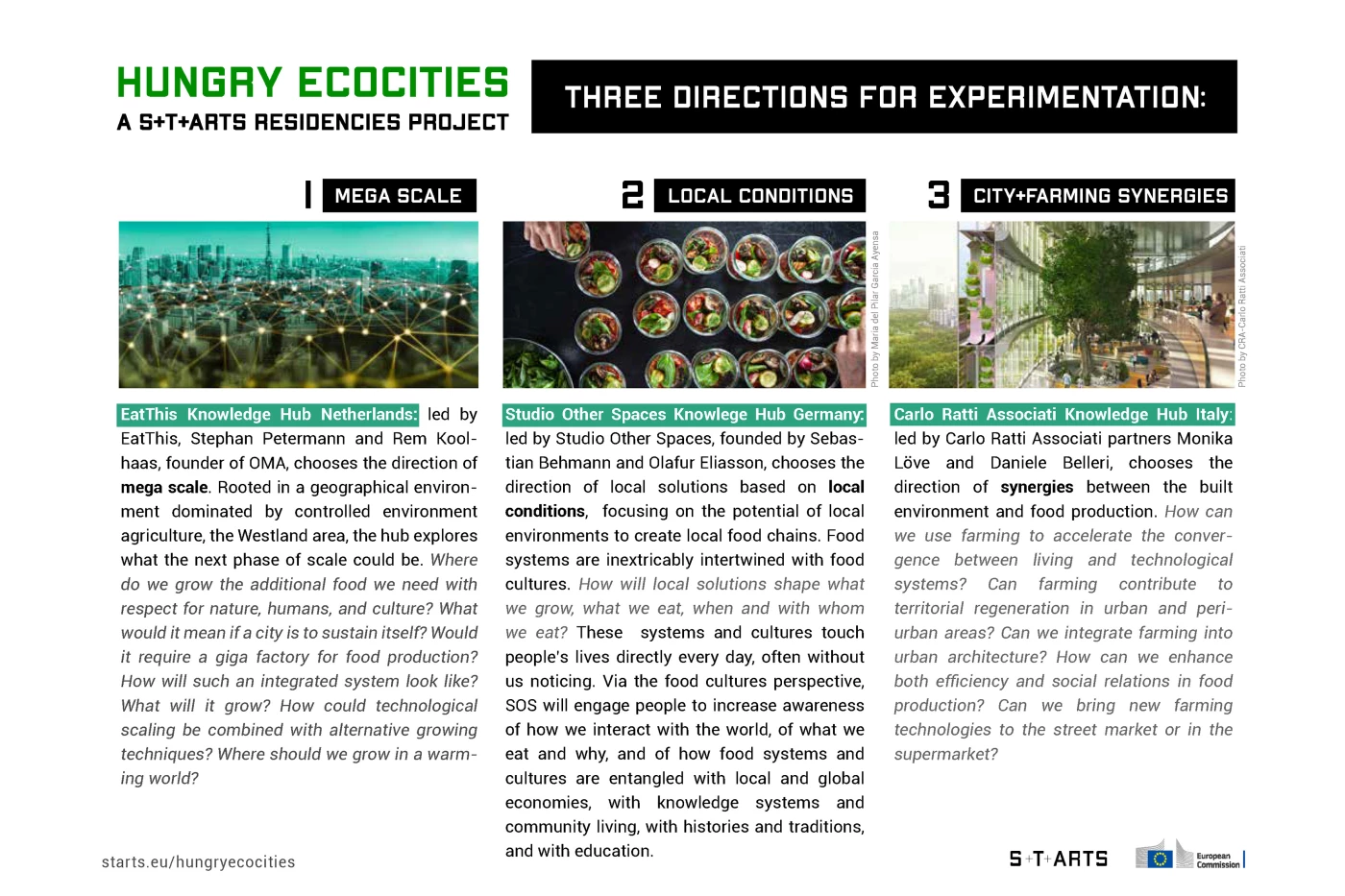
Based on research and stakeholder interviews three design studios develop a specific vision. Hungry Ecocities
/4 -
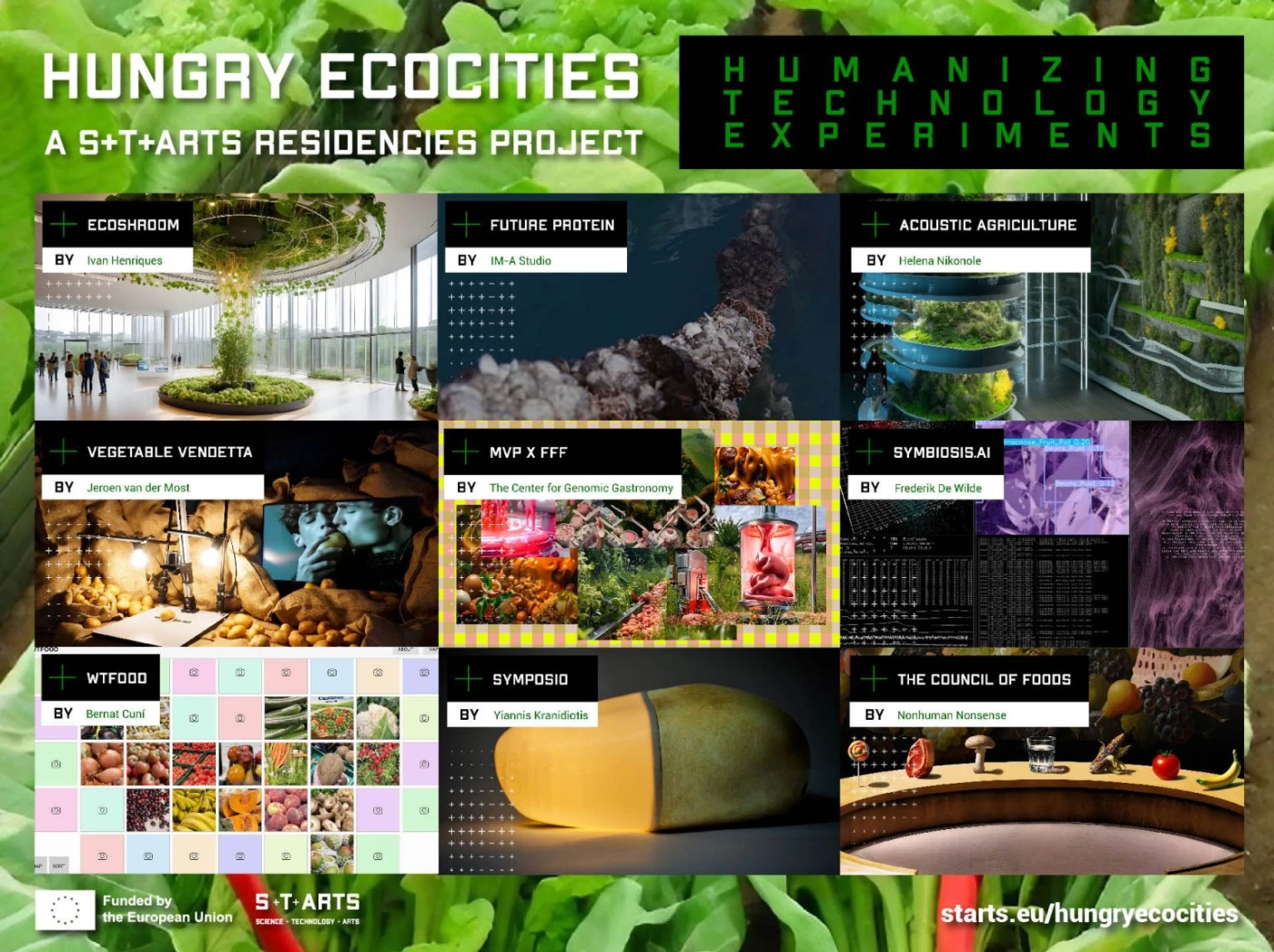
This vision forms a bases for a first group of artitst to submit proposals that get prototyped together the involved academic partners. Hungry Ecocities
/4 -
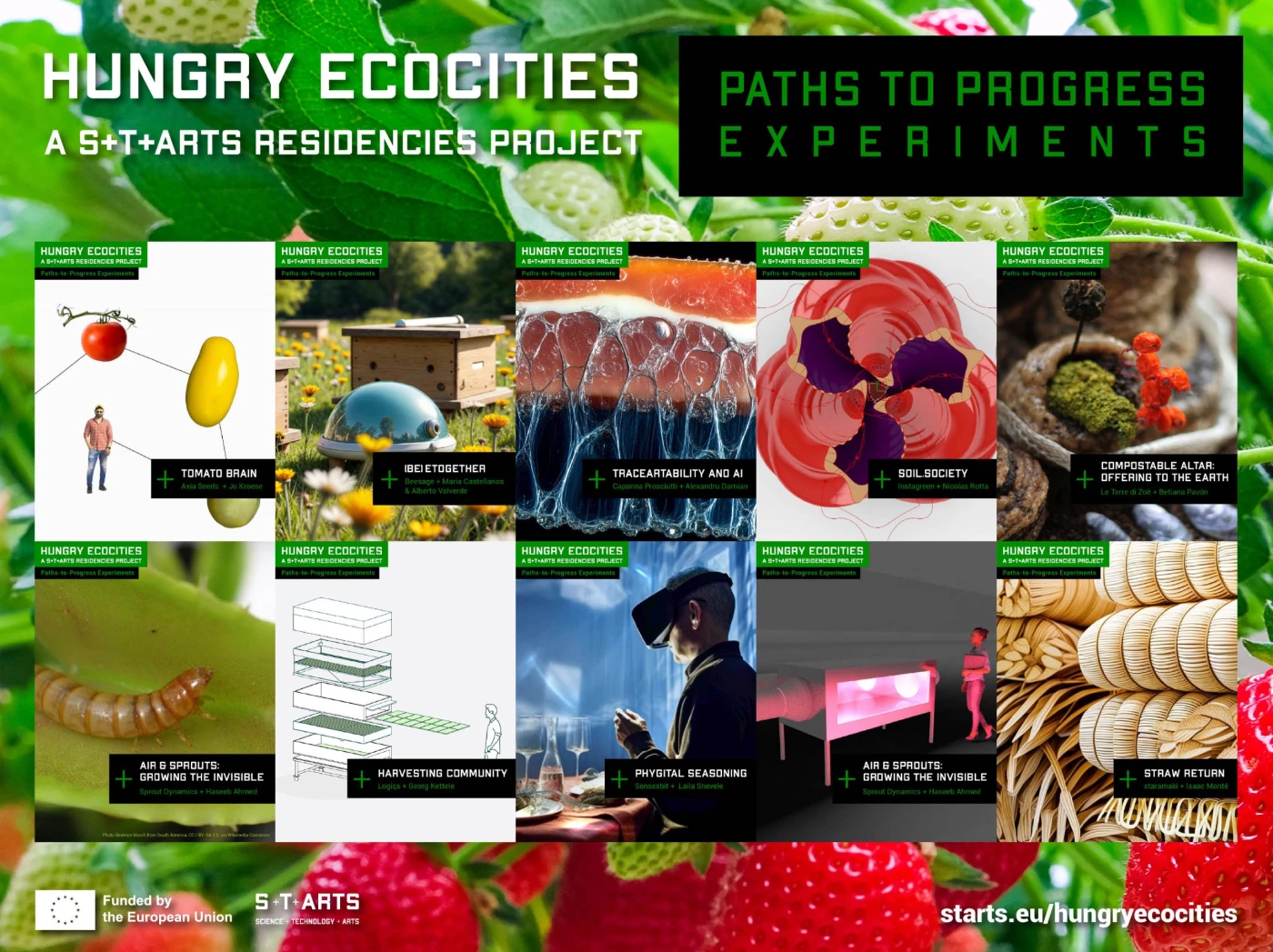
In a second round of artist projects collaboration between companies and artists is further intensified and elaborated. Hungry Ecocities
/4


Hungry EcoCities puts forward a high-level alliance between science, technology, and the arts, to effectively explore how digital technologies & AI applications can lead in turn to reduced food waste, more sustainable value chains, eco-friendly attitudes, and more ethical food consumption. How can we develop ways of creating a more healthy, sustainable, and affordable agri-food system for all?
In Hungry EcoCities, studios, universities, growers, and agricultural specialists team up with, artists and creative thinkers to come up with new ideas for the future food system. Hungry EcoCities will host up to 20 S+T+ARTS residencies and will be working towards defining, designing, and developing AI-enabled responsible, art-driven solutions for the end-users in the agri-food industries.We work around the igniting question: ‘How can increased awareness and technological tools impact a future where we use resources responsibly to produce and consume food?’EatThis Knowledge Hub Netherlands: led by Stephan Petermann and Rem Koolhaas, founder of OMA, chooses the direction of mega scale. Rooted in a geographical environment dominated by controlled environment agriculture, the Westland area, the hub explores what the next phase of scale could be. Where do we grow the additional food we need with respect for nature, humans, and culture? What would it mean if a city is to sustain itself? Would it require a giga factory for food production? How will such an integrated system look like? What will it grow? How could technological scaling be combined with alternative growing techniques? Where should we grow in a warming world?The Hungry EcoCities project has received funding from the European Union’s Horizon Europe research and innovation programme.
Brno University of Technology, KU Leuven, In4Art, Carlo Ratti Associati, Studio Other Spaces, Mendel University, Eatthis, FundingBox