Chinese Villages: the new Era
With continuous investment in infrastructure and poverty alleviation unmatched by Western counterparts, China’s stage-setting for urban-rural connections in the 21st century might be unanticipated to the rest of the world. The installation, part of AMO’s Countryside the Future at the Solomon R. Guggenheim Museum in New York shows how a mix of state and market interventions directs digital transformation, agricultural technology, tourism, and culture in reestablishing the role of, and life in, the countryside.
2020
-
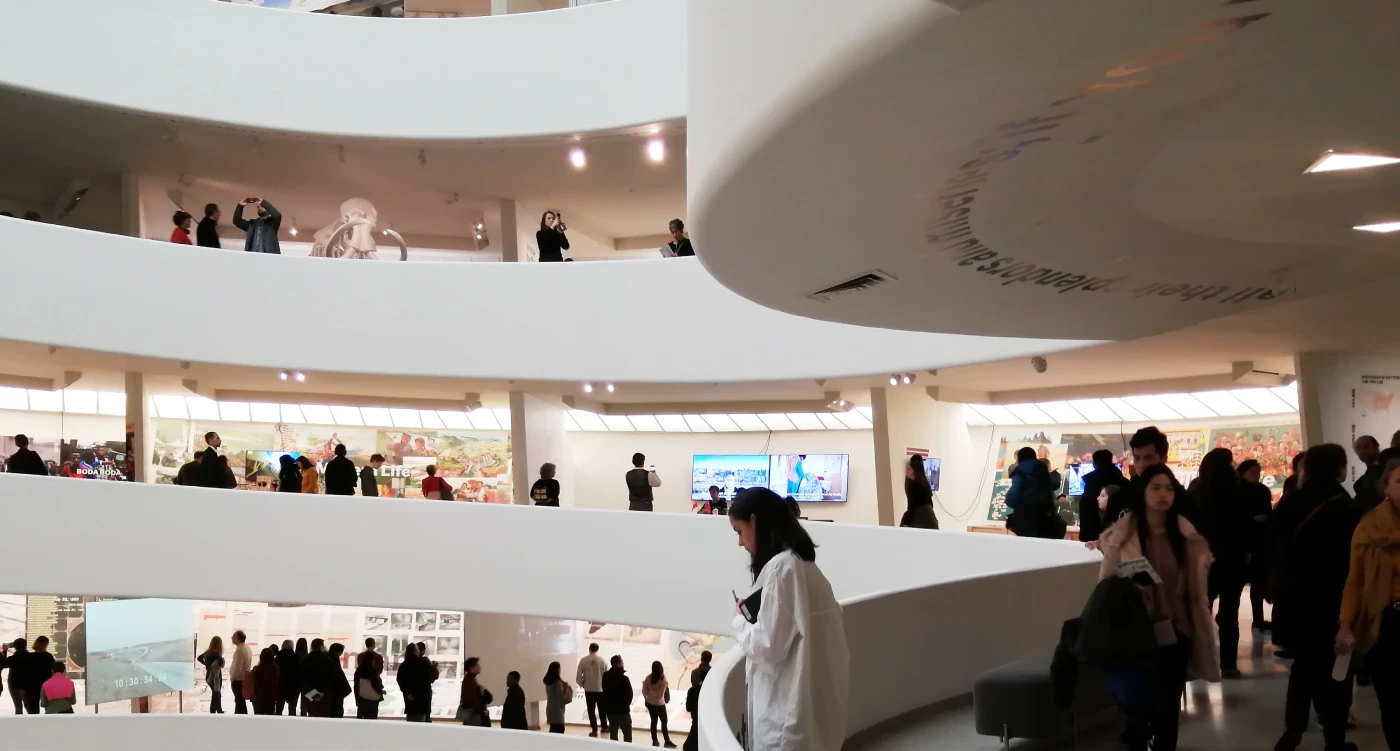
Chinese Villages:A New Era is the result of a three-year collaboration between AMO and the Central Academy of Fine Arts in Beijing displayed as part of the Countryside, The Future exhibition. Photo by Vivian Song
/9 -
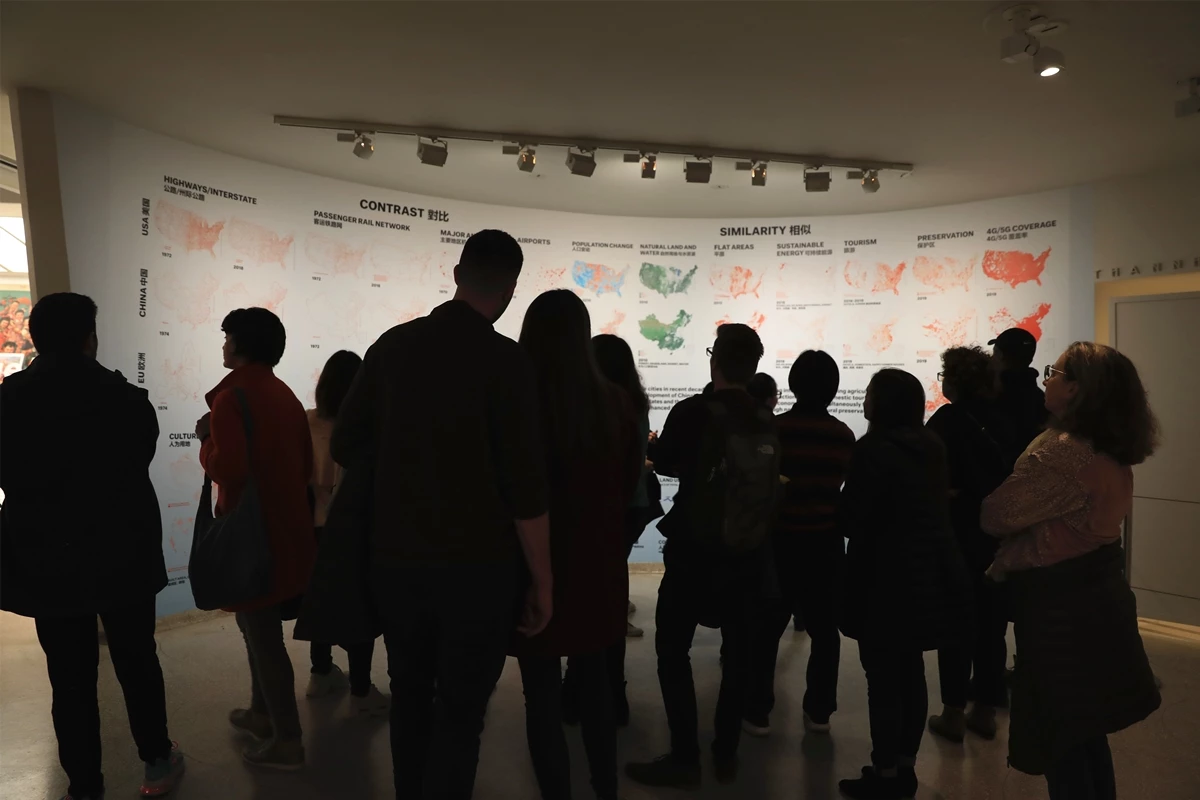
The installation sets off by showing a situation-room like countryside atlas that compares the scale of China, Europe and the US countrysides. Photo by Consulate of the PRC in NY
/9 -
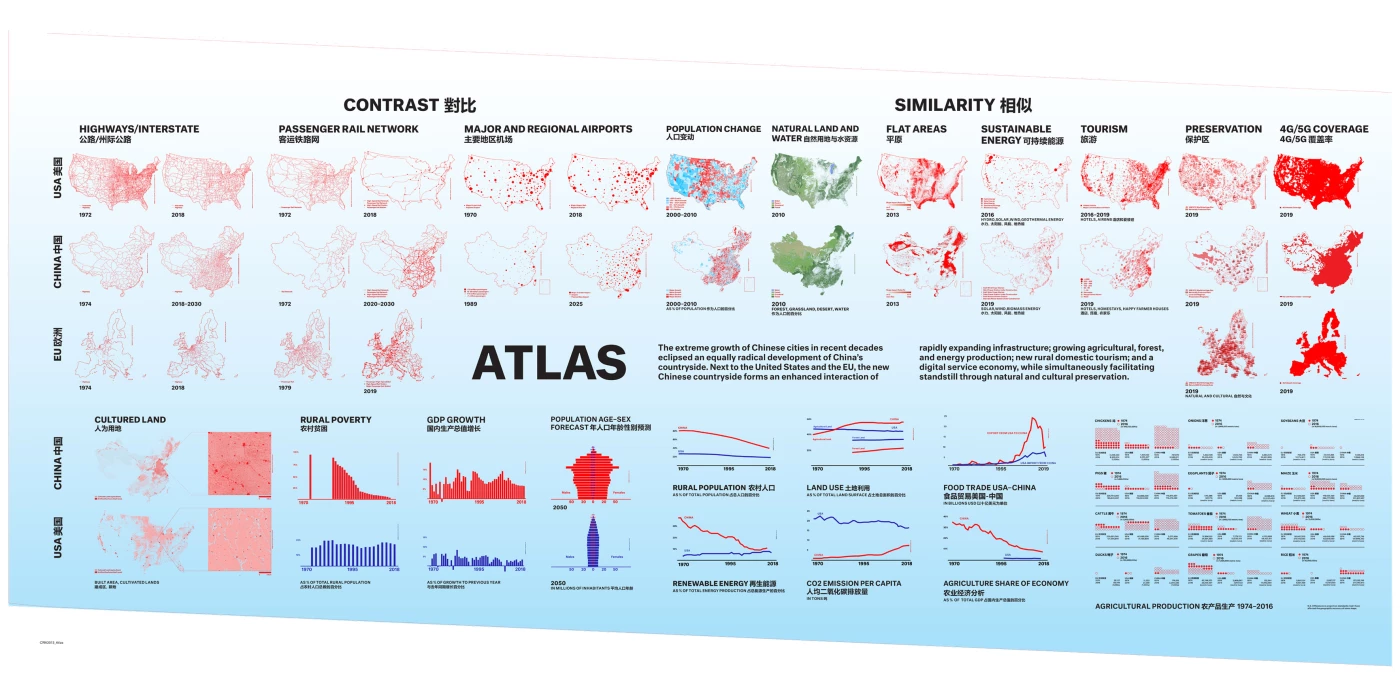
The Atlas highlights parallels and disjunctions; shared developments in developing new sustainable energy production facilities and overall declining rural inhabitation, but also opposites: where China heavily expanded its countryside rail, highway and airport infrastructure, the US shows evident decline.
/9 -
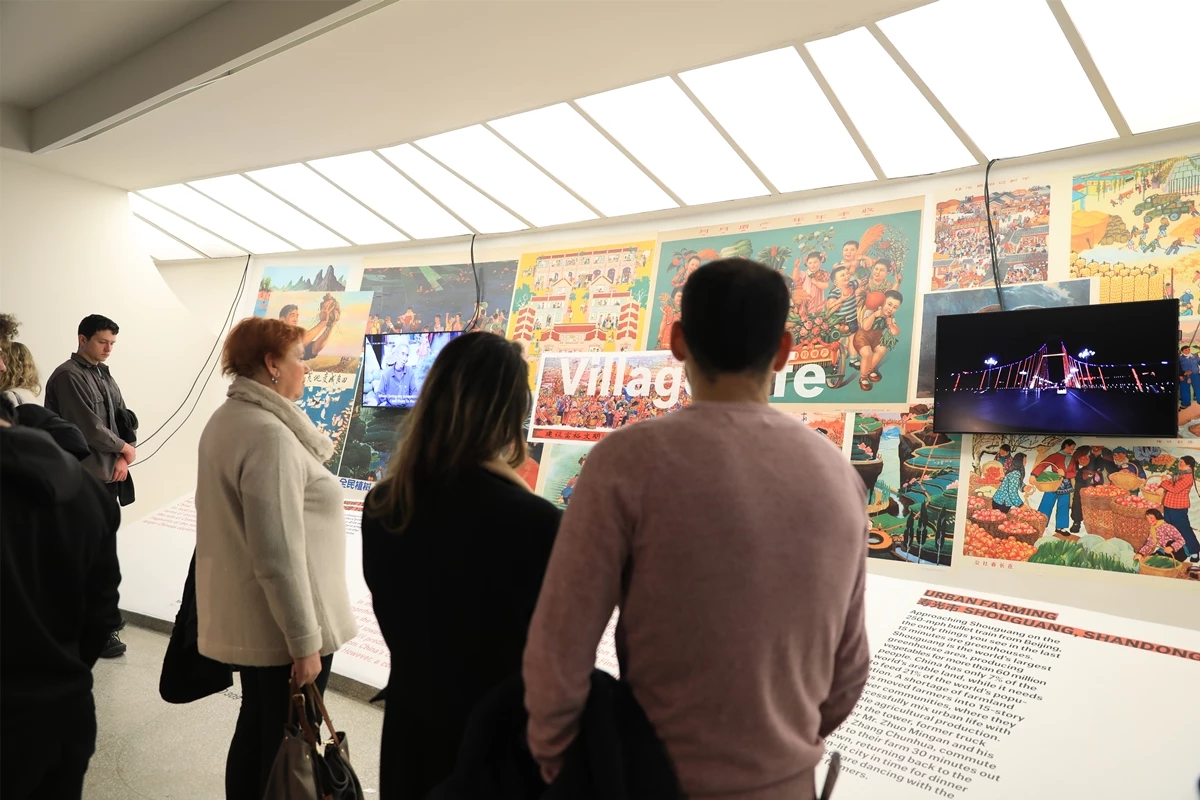
The next bay explores four highlighted villages that shows how new lifestyles are forming the new Chinese countryside from e-commerce village of Dongfeng, to peri-urban horticultural landscapes of Shouguang, reinvented tourism in Yubulu and last persisting traces of commune life in Hunan. Photo by Consulate of the PRC in NY
/9 -
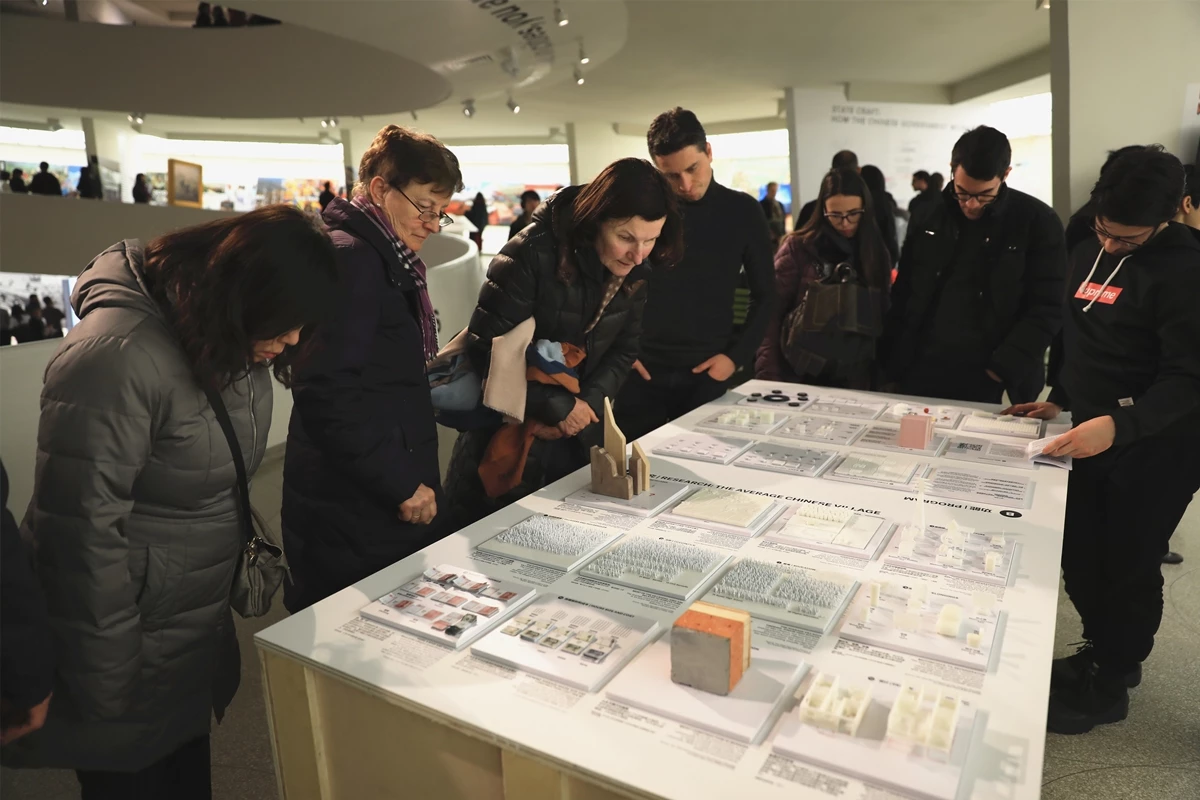
These village are placed against a backdrop that shows the statistical average of countryside life in China. Photo by Consulate of the PRC in NY
/9 -
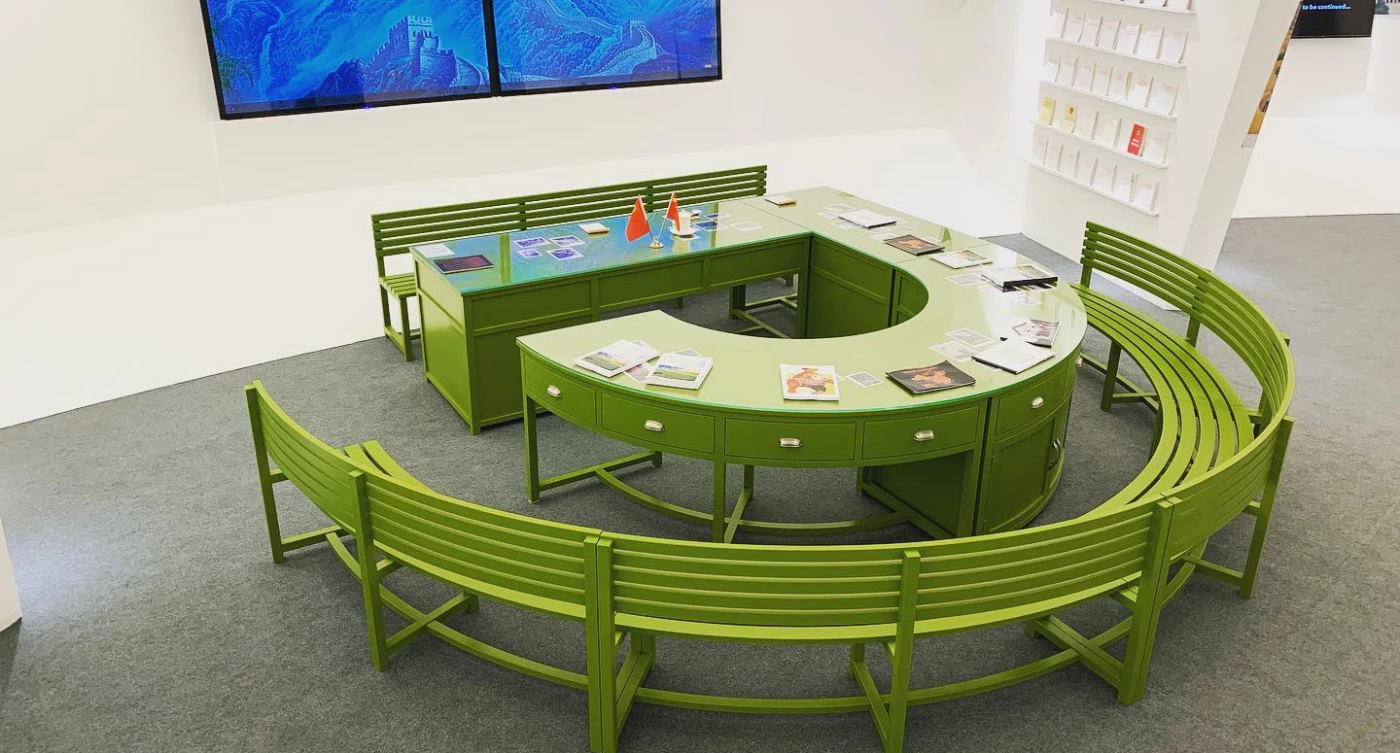
This bay is followed by a countryside governance bay that features an original interpretation of local government functioning in furniture by Hypersity. Photo by Hypersity
/9 -
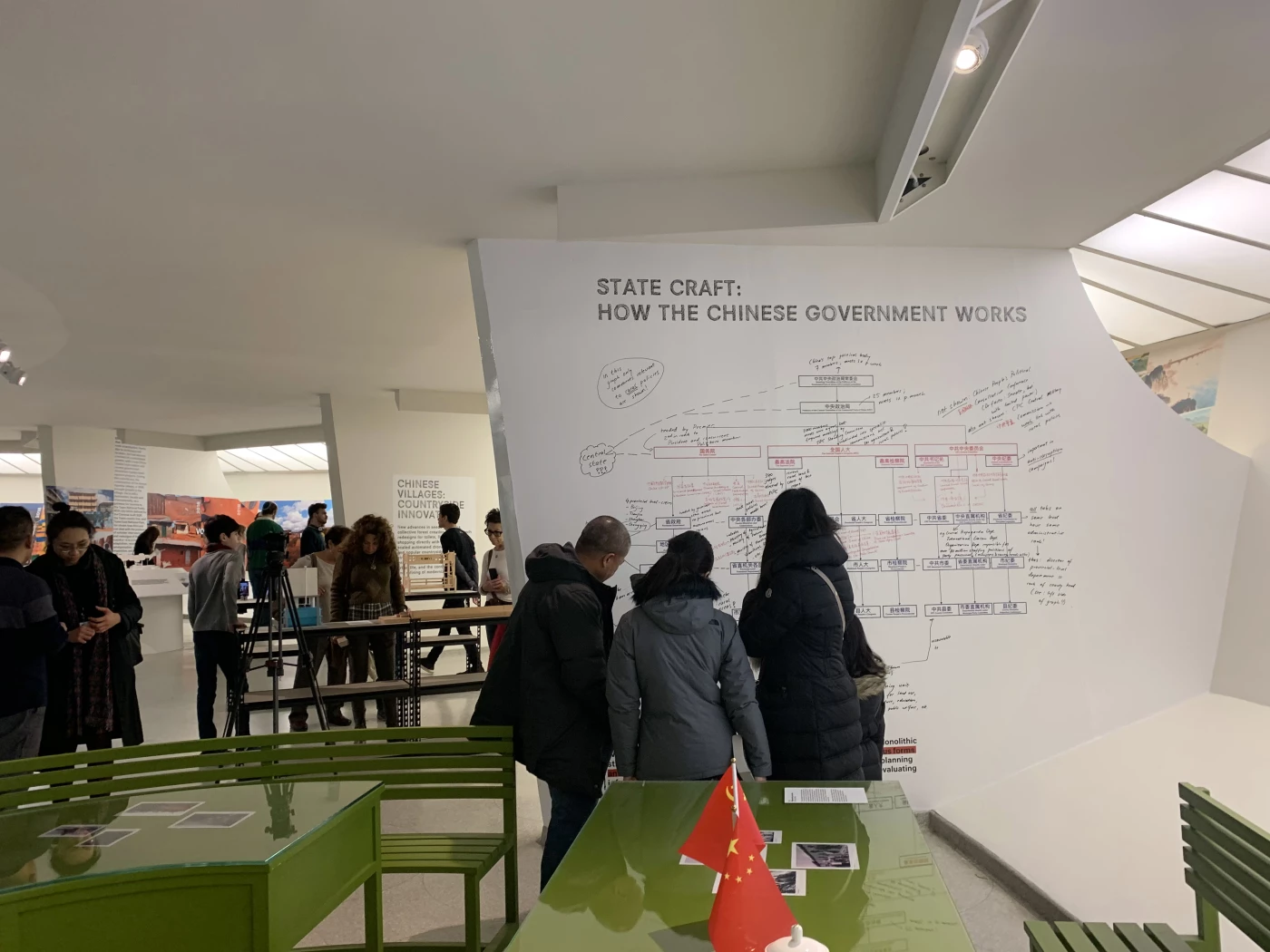
An annotated organisational chart by two Chinese political scholars showing power structures inside of the Chinese government and relevant interlocking policy directives and lines to set out the future of the countryside
/9 -
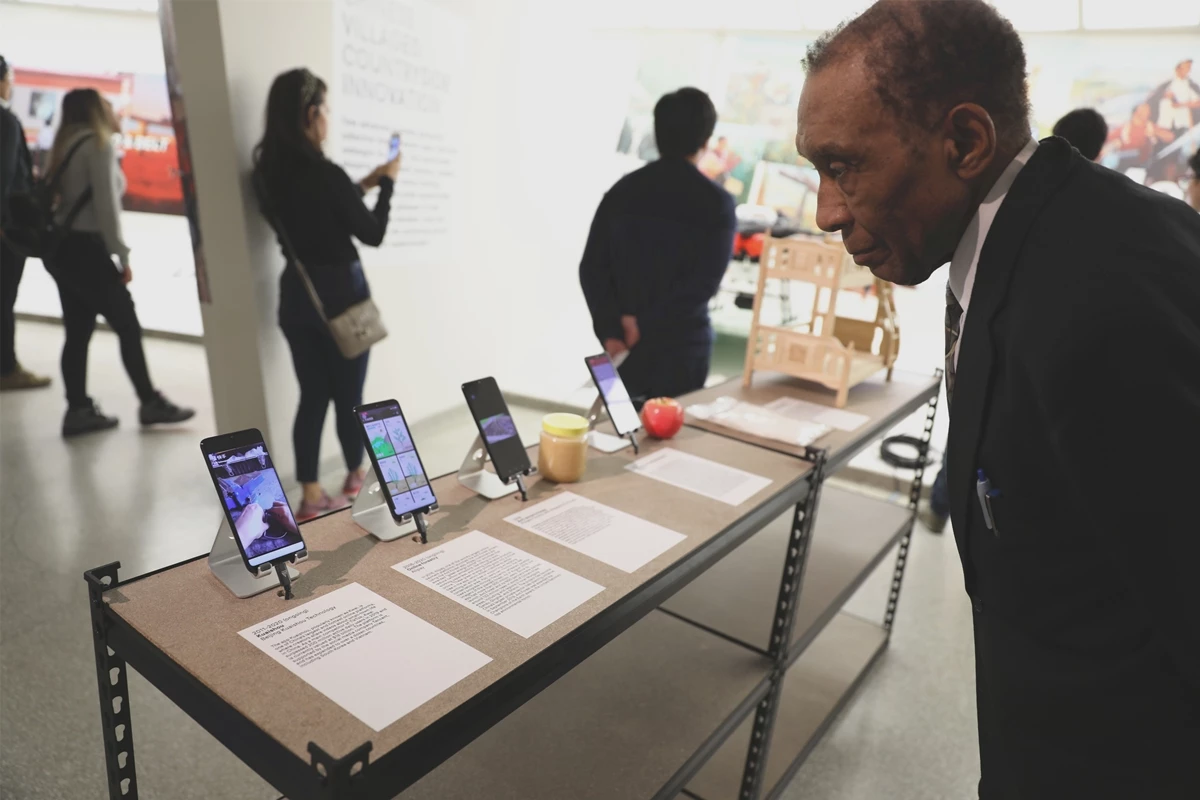
The final bay explores countryside innovations from China. Often portrayed as a country of copycats it shows how China is innovating the countryside through digital apps that connect farmers with to sell their produce directly, or offer remote nature observation, new agricultural drones, and low-tech solutions that re-introduce lost rice varieties, or toilet designs aimed at improving the quality of life of elderly in the countryside. Photo by Consulate of the PRC in NY
/9 -

Throughout the bays a background wallpaper features a selection of Chinese historical posters depicting future visions for the Chinese countryside.
/9


Trailer for Chinese Village: the new Era
In parallel to decades of relentless urbanization, the Chinese government has been dramatically redefining its countryside. With continuous investment in infrastructure and poverty alleviation unmatched by Western counterparts, China’s stage-setting for urban-rural connections in the 21st century might be unanticipated to the rest of the world. The installation shows how a mix of state and market interventions directs digital transformation, agricultural technology, tourism, and The installation sets off by showing a war-room like countryside atlas that compares the scale of China, Europe and the US countrysides, highlighting the parallels and disjunctions; both areas show a vast increase in countryside activity concerning, where as infrastructure shows opposites: where China heavily expanded its countryside rail, high way and airport infrastructure, the US shows evident decline.The next bay explores four highlighted villages that shows how new lifestyles are forming the new Chinese countryside from e-commerce village of Dongfeng, to peri-urban horticultural landscapes of Shouguang, reinvented tourism in Yubulu and last persisting traces of commune life in Hunan. These village are placed against a backdrop that shows the statistical average of countryside life. This bay is followed by a countryside governance bay that features an original interpretation of local government functioning in furniture, an annotated organisational chart showing power structures inside of the Chinese government and relevant interlocking policy directives and lines to set out the future of the countryside.The final bay explores countryside innovations from China. Often portrayed as a country of copycats it shows how China is innovating the countryside through digital apps that connect farmers with to sell their produce directly, or offer remote nature observation, new agricultural drones, and low-tech solutions that re-introduce lost rice varieties, or toilet designs aimed at improving the quality of life of elderly in the countryside.Throughout the bays a background wallpaper features a selection of Chinese historical posters depicting future visions for the Chinese countryside.
MISC.: Stephan Petermann with Vivian Song
CAFA: Fan Di'an, Lv Pinjing, Shi Yang and CAFA Experimental Studio members
Contributors: Prof. Wen Tiejun, Prof. Peter Ho, Prof. Jiang Jun, Prof. Karl Otto Ellefsen, Prof. Zhu Pei, Li Shaojun, Li Lin
AMO: Rem Koolhaas, Dongmei Yao with Rita Varjabedian, Anne Schneider, Aleksander Zinovev, Sebastian Bernardy, Yotam Ben Hur, Samir Bantal, Valentin Bansac, Ashley Mendelsohn, Janna BystrykhSpecial thanks to The C Foundation, The Netherlands in Beijing, and OMA.