What is the Netherlands | Wat is Nederland
Exhibition showing more than 100 years of Dutch contributions to the World Expo. 14 Dutch historical designs showing its 14 different versions and stages of the Netherlands are organized in a historical sequence that can be read in sequence or reverse, under the gaze of a large carillon ̶ the most frequently featured Dutch trait at the expo ̶ that plays the national anthem every 15 minutes…
2016
-
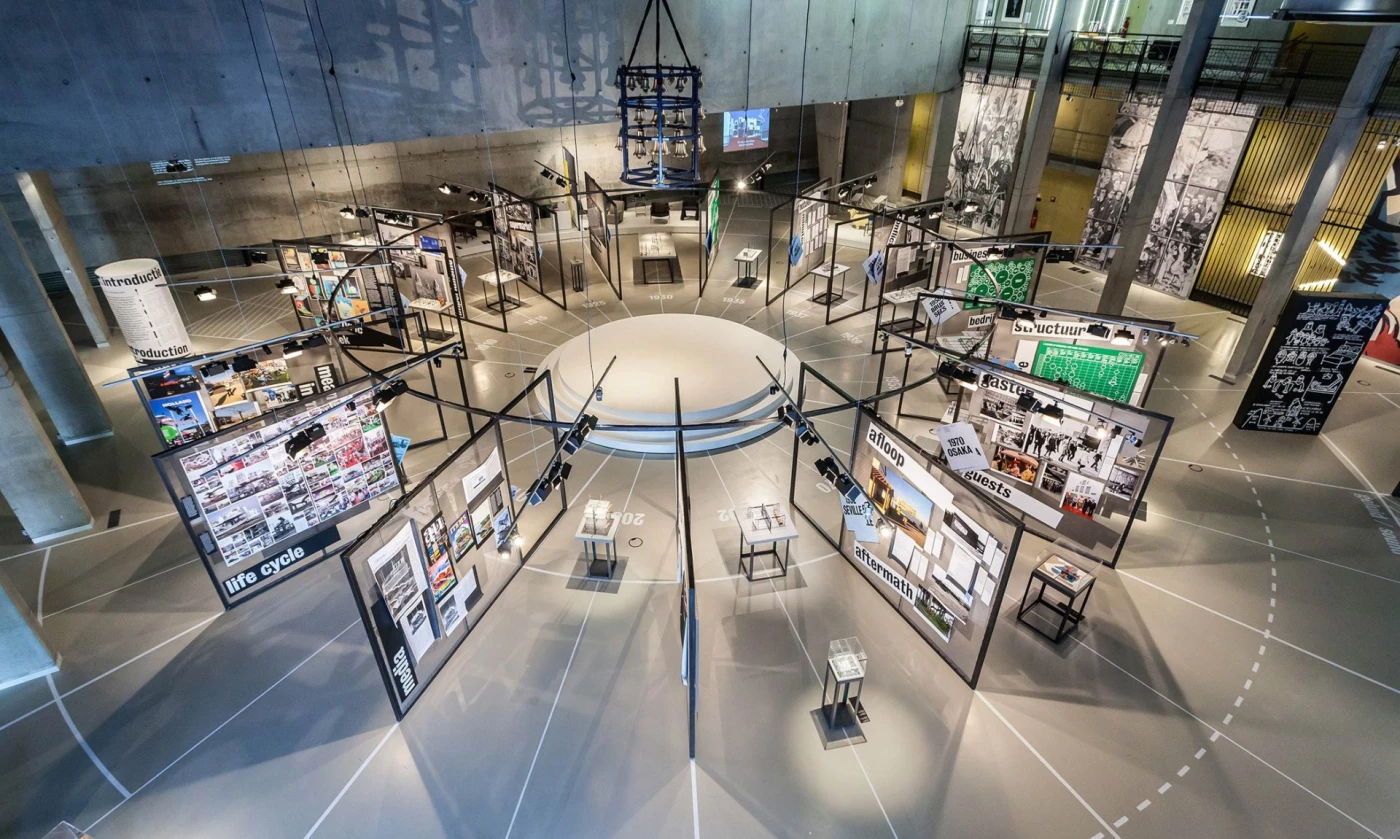
Bird’s eye view of What is the Netherlands in the central exhibition space of Nieuwe Instituut. Photo by Peter Tijhuis
/9 -
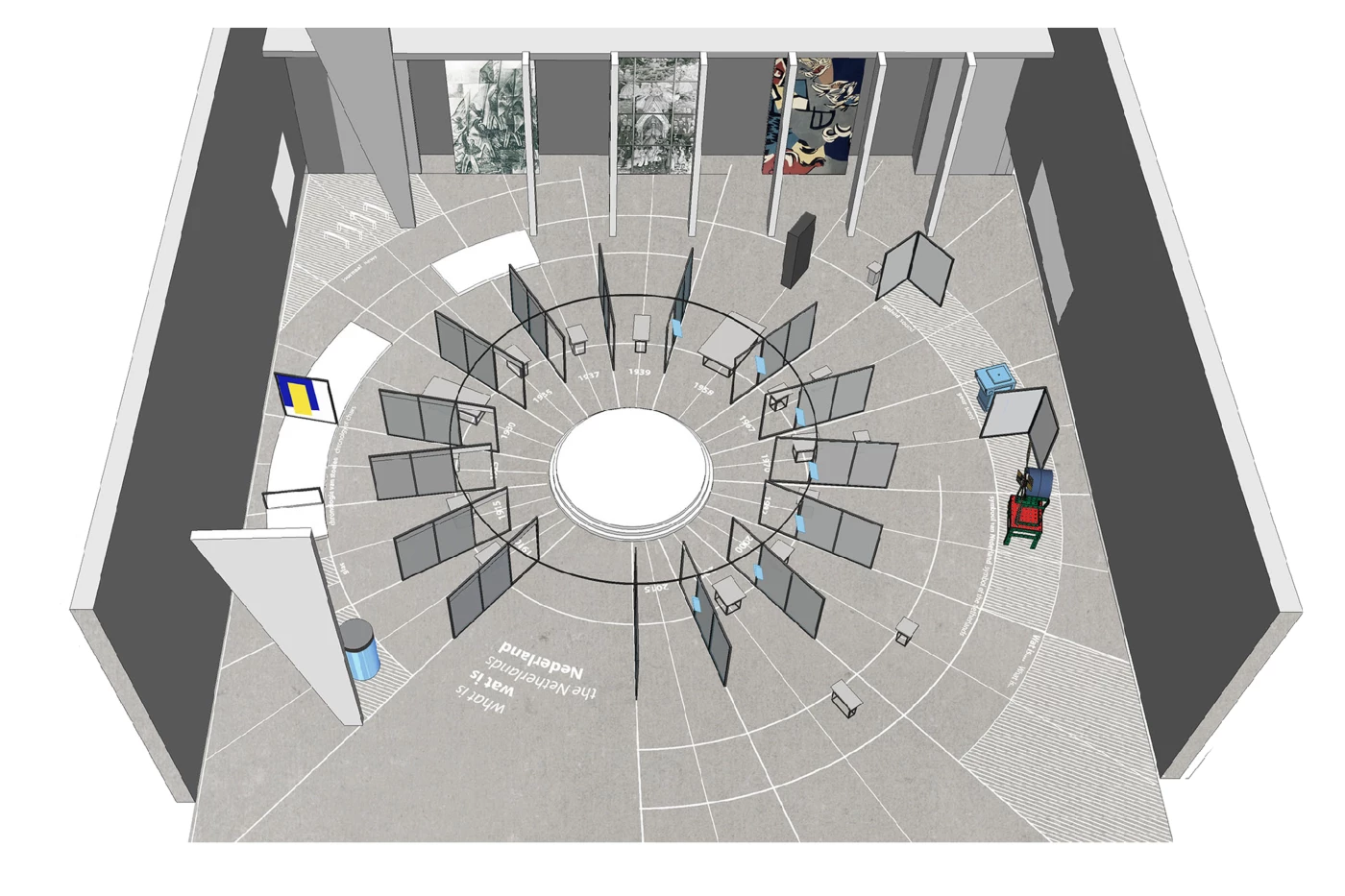
The concentric exhibition layout is based on 19th century floorplans of early World exhibitions. It also allows visitors to create their own exhibition path and creates an equal representation for all expo editions without losing historical context.
/9 -
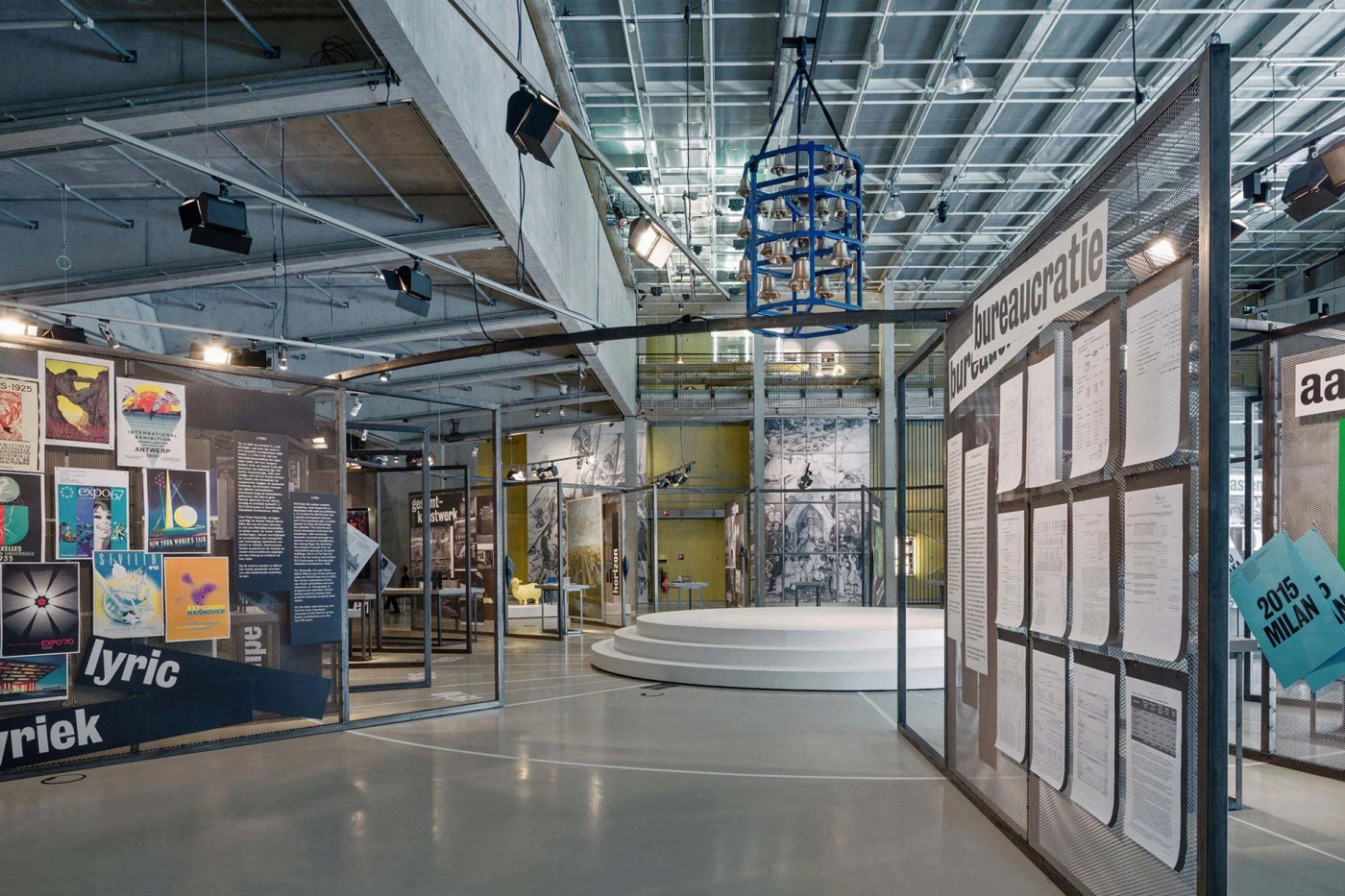
The exhibition wants to give equal attention to the bureaucratic construction of expo contributions looking at budget information, and formalized ambitions from ministries, while also highlighting their imaginative and lyrical dimensions as parts of a history of nation building. Photo by Johannes Schwarz
/9 -
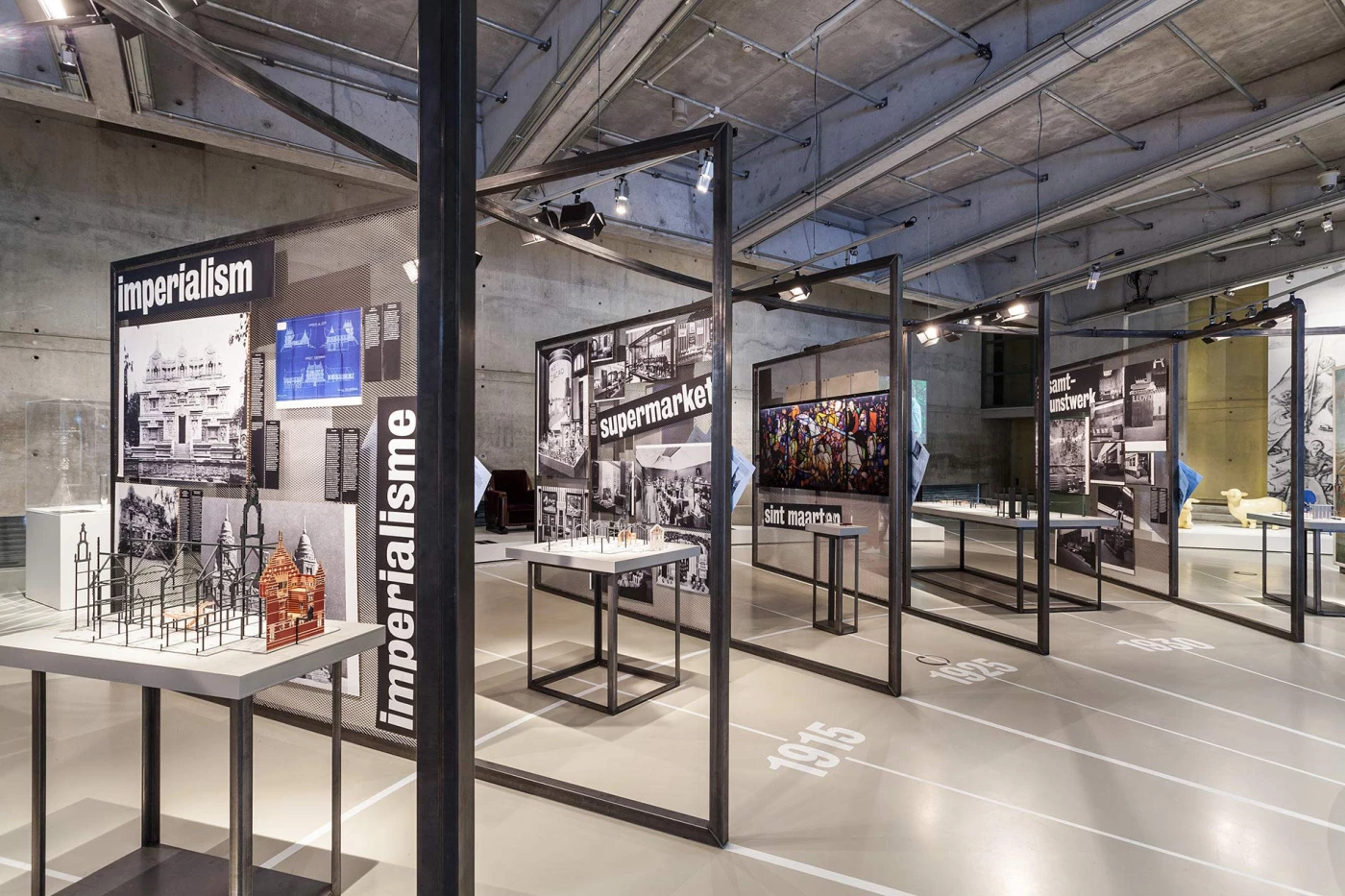
Where one side shows what visitors could experience, the other side exemplifies the bureaucratic structures of the display, including sponsorships, correspondence and the involvement of designers. Photo by Peter Tijhuis
/9 -
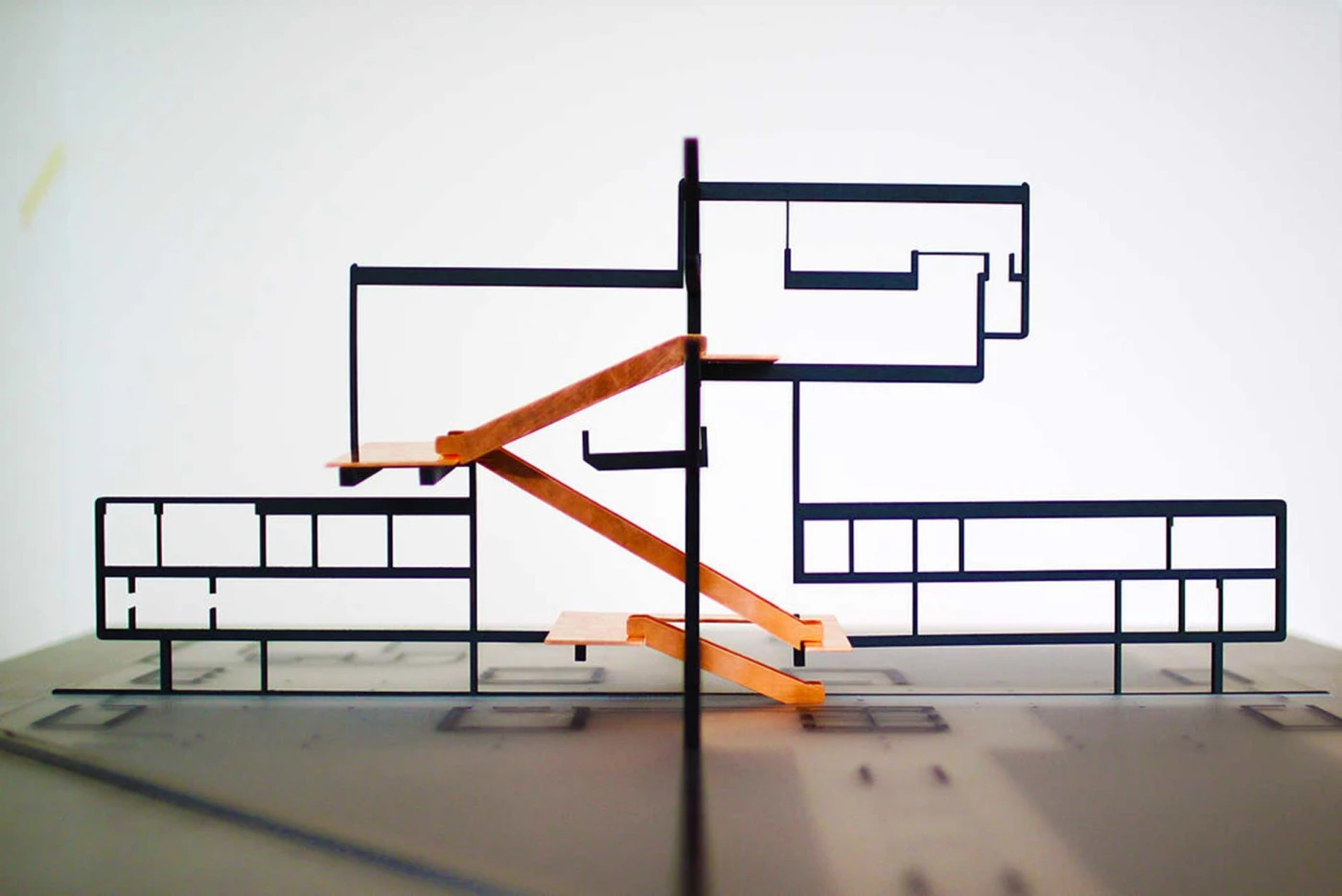
Each contribution has an outline scale model of the pavilion, made to the same scale to make them comparable. Special details in the model that feature particular highlights. Outline model of the Dutch pavilion for Osaka 1970 designed by Jaap Bakema and Carel Weeber. Scale models by Cedric van Parys.
/9 -
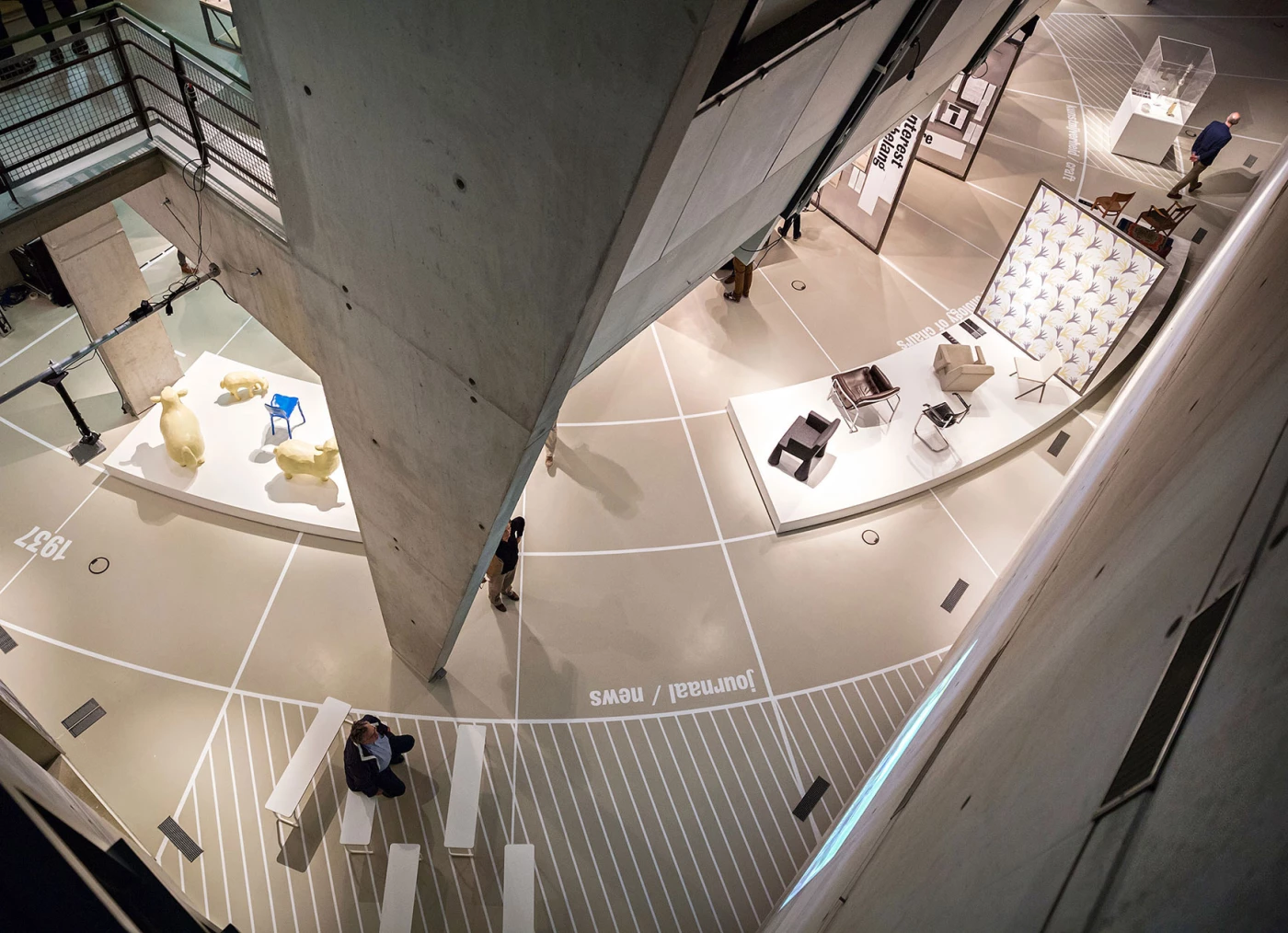
Where the inner ring is dedicated to the specifics of the pavilion designs, the outer ring of the exhibition collects objects and other realized fragments from the different Dutch expo pavilions. Photo by Matthijs Immink
/9 -
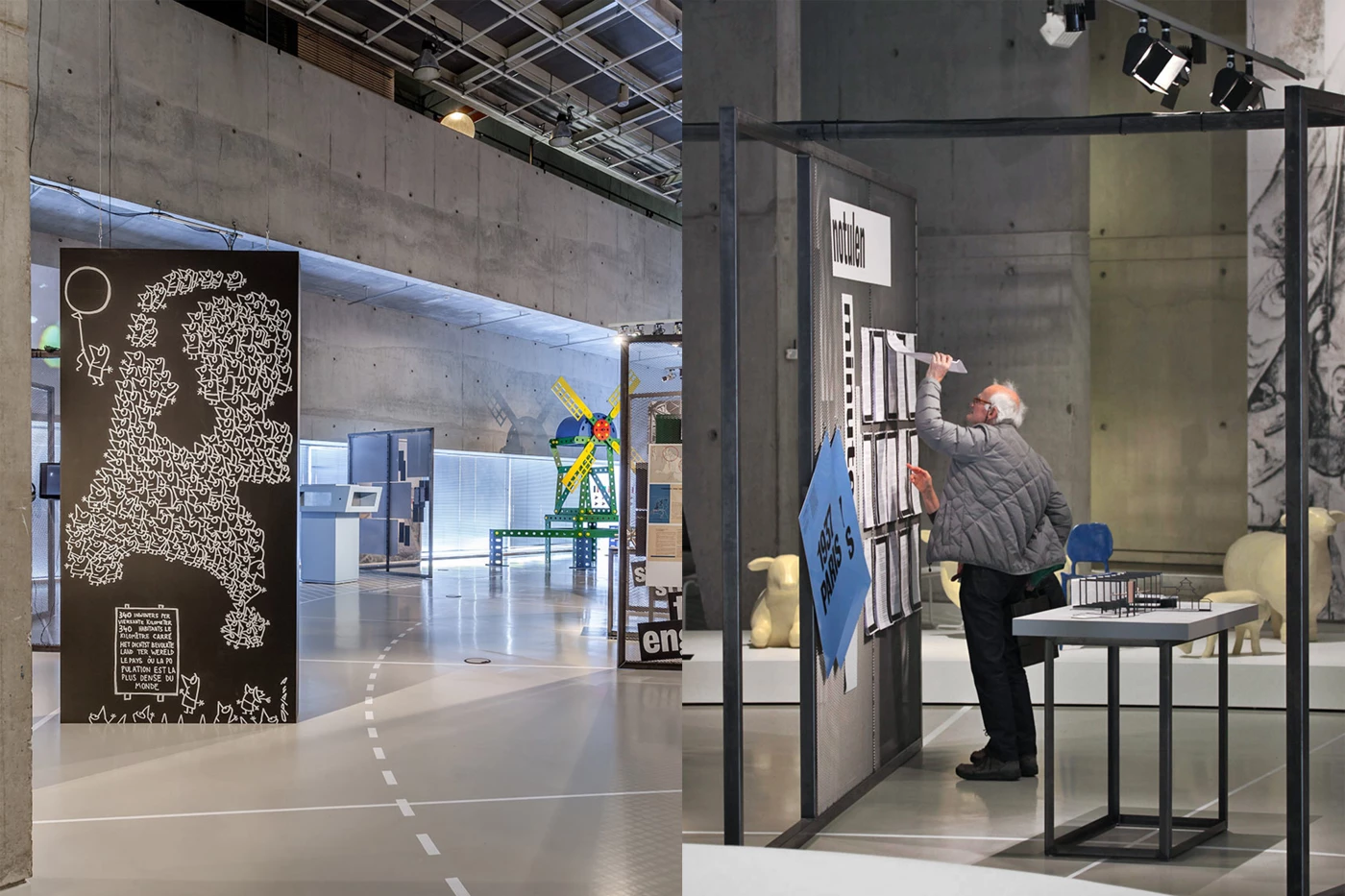
Objects include replicas of a Dutch smell box designed artist Woody van Amen, a large windmill built from supersized Meccano, a mural by Karel Appel, and contributions by Dutch cartoonist Opland. Photo by Johannes Schwarz
/9 -
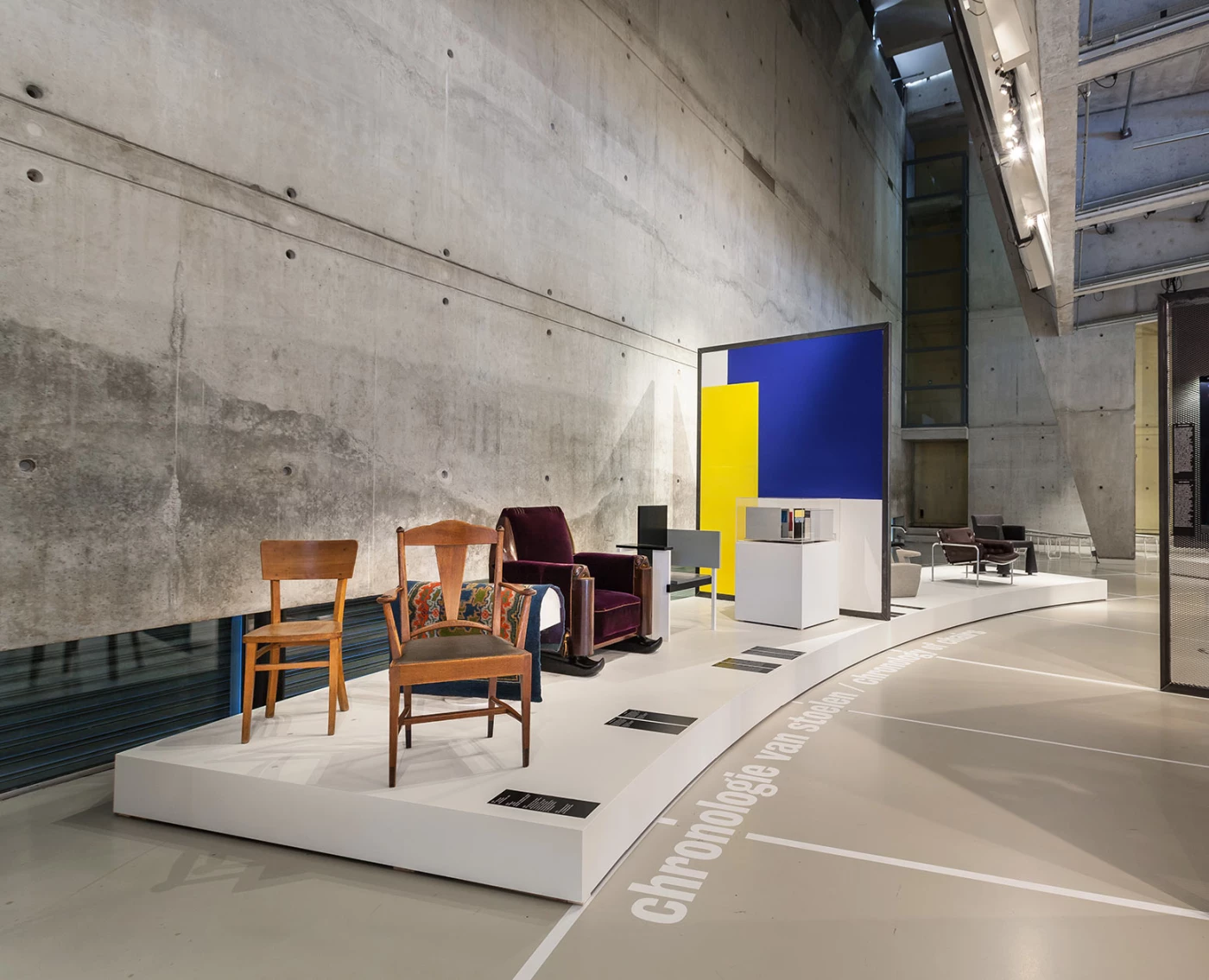
Chairs used in most pavilions where shown including an art deco chair by Michel de Klerk for the 1920s, chairs by Rietveld and Carel Weeber, and more recent Sheep inspired benches by ZUS. Photo by Peter Tijhuis
/9 -
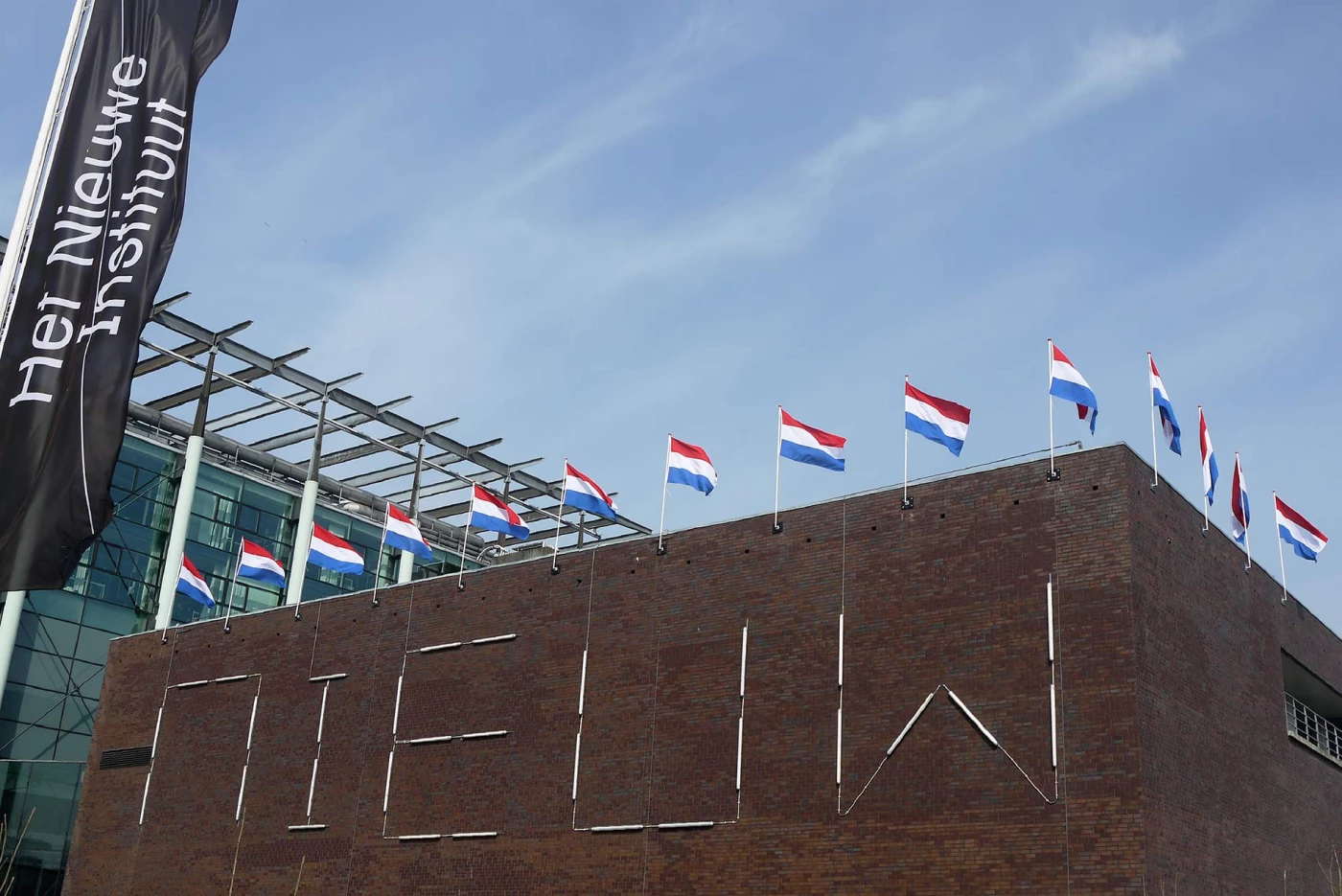
14 Flags adorn the roof line of the exhibition hall celebrating the exhibition as a historical reference to the 1915 Dutch pavilion for the San Francsico expo designed by Willem Kromhout.
/9


